

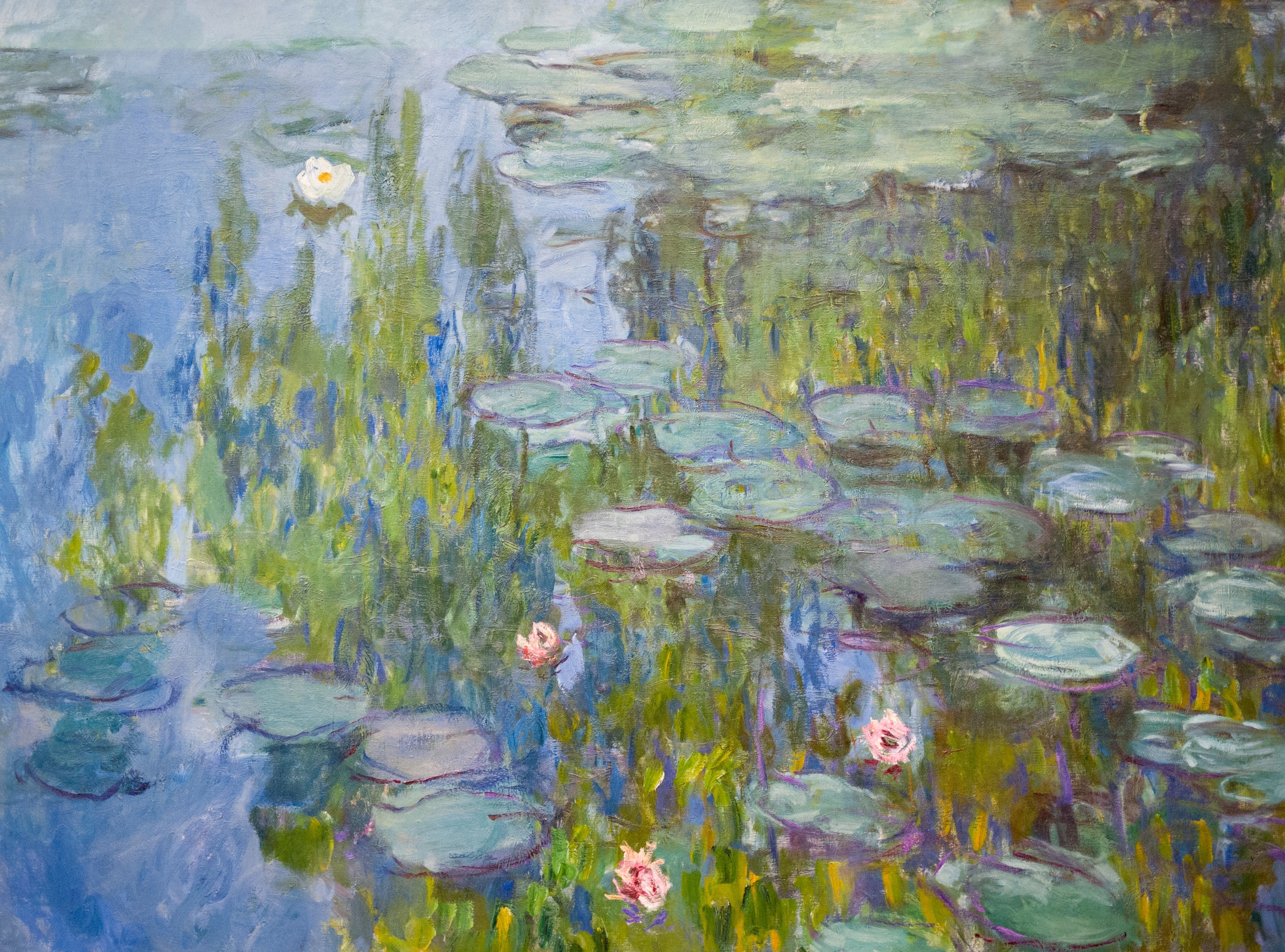
Earlier this week, a Twitter user (@SHL0MS1) posted the following:


Some sample responses from the comments:
the reflection in AI art is just noise splattered right. monet actually understood how light behaves on water
no frame, no sense of the threshold between subject and object, just colors
Depth, contrast, and cohesion are the most obvious. There’s also no clear focal point.
Sure. It feels less lively. It lacks the texture, the rugged edges, the folds, the crevices and creases and bevels and topology of plastic arts. The fine, calculated highlights. The AI version is granulated pixelation, and it looks that way, it lacks the mess of humanity.
The punchline: it’s not AI generated. It’s a real Monet! (Specifically from his Water Lilies series; this particular one was painted in 1915 and is currently in Neue Pinakothek, Munich).
Of course, many commenters deleted their replies in embarrassment. Some insisted that the crop, digitization, lack of context, etc. made it tangibly different from the original, physical painting, so their critiques were still valid. A few even went as far as to say that even if it was a real Monet, it was an “inferior” Monet, anyways.
I’m no Monet expert. I didn’t comment at the time so you’ll just have to take my word for it, but my immediate gut reaction upon seeing the post was: wow, AI art’s really gotten good, I can’t really tell the difference between this and a real Monet at all. And clearly, that was the case for many, many other people as well.
Look, I’m an artist. Not professionally; it’s not my livelihood, which is probably why I’m able to comment on this from more of a distance than the working artists I see online and that I know in real life. But I’ve been drawing and painting since I was a child, and it’s one of my great joys in life, so I’m definitely emotionally invested in Art. And as an artist, I have to say… guys, you need to get your heads out of the sand.
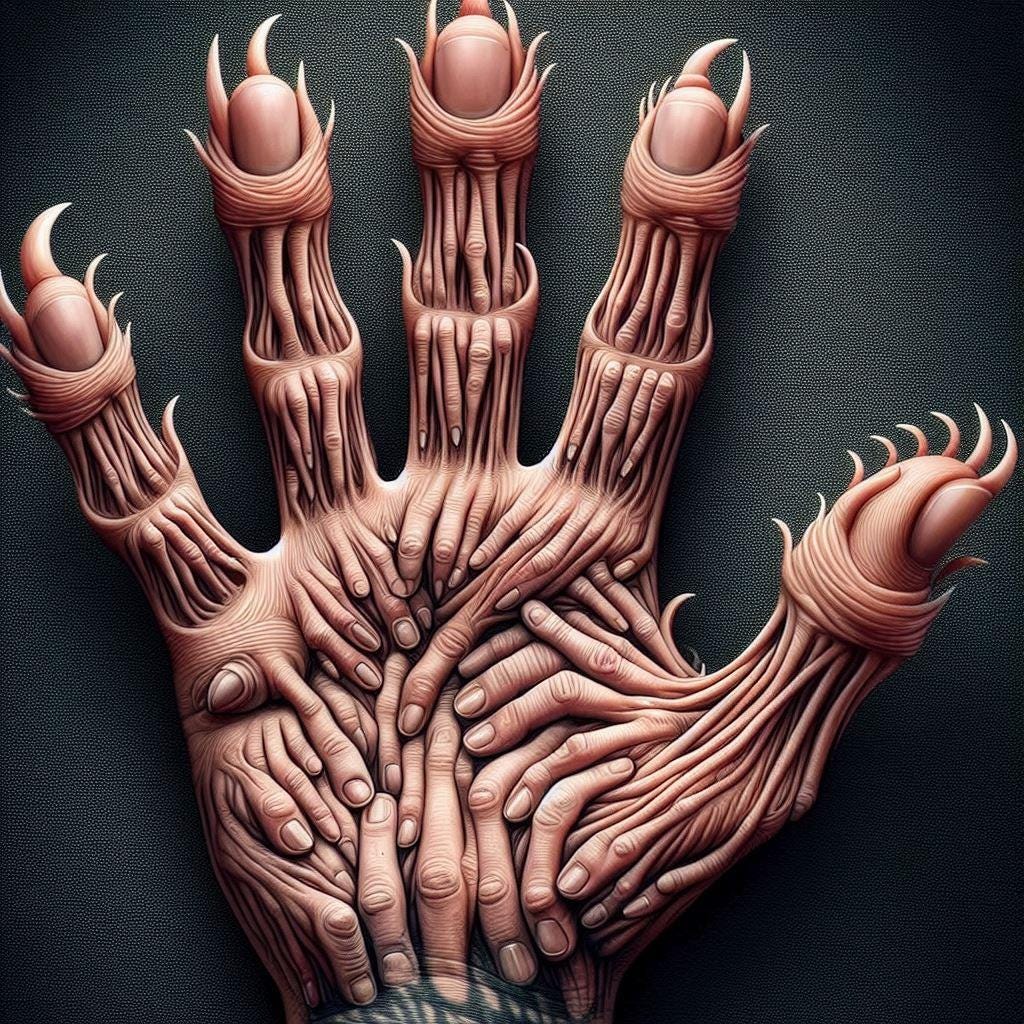
AI art is Good now. Good in the technical sense, in the sense that a well-generated image will be able to fool 99% of people who see it—even discerning artists. Attempting to identify the “tells” of AI art has been a rapidly accelerating arms race: first it was hands (which, I’ll note, is something human artists infamously struggle with as well!). Then it was text. Then it was the piss-yellow filter. Like whack-a-mole, when one obvious flaw was fixed, another one would make itself known. But it looks like we’re finally running out of moles.
Another (actual) piece of AI art was making the rounds the other day. It was an AI-generated animated short created with a tool by Runway:

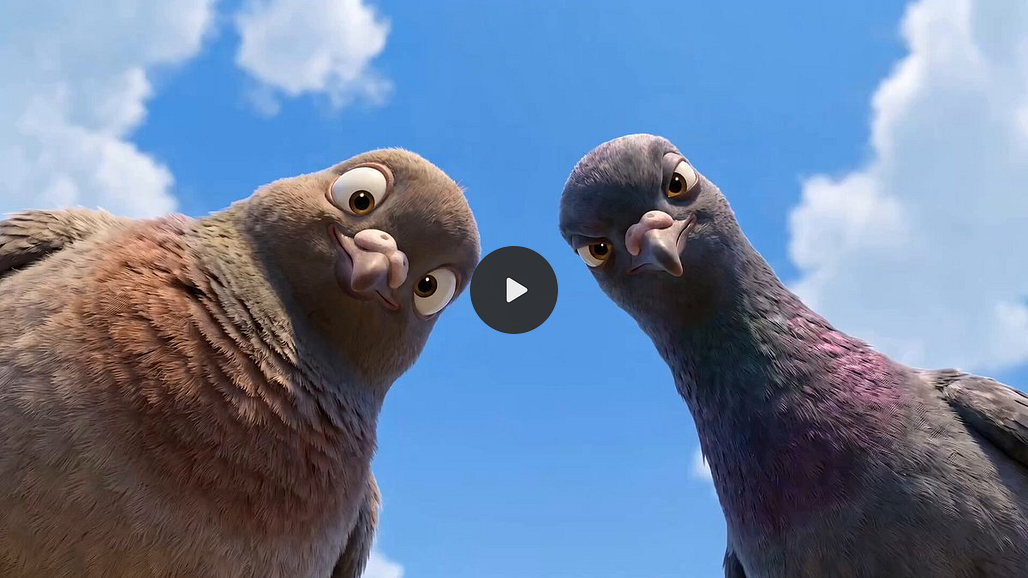
My personal opinion of the short: it’s fine. The visuals are on the level of a low-tier Dreamworks or Illumination film. The story/writing is aggressively mediocre. The voices still clearly carry that uncanny valley, flattened AI affect.
But nonetheless: holy crap. Remember when AI video used to look like this?
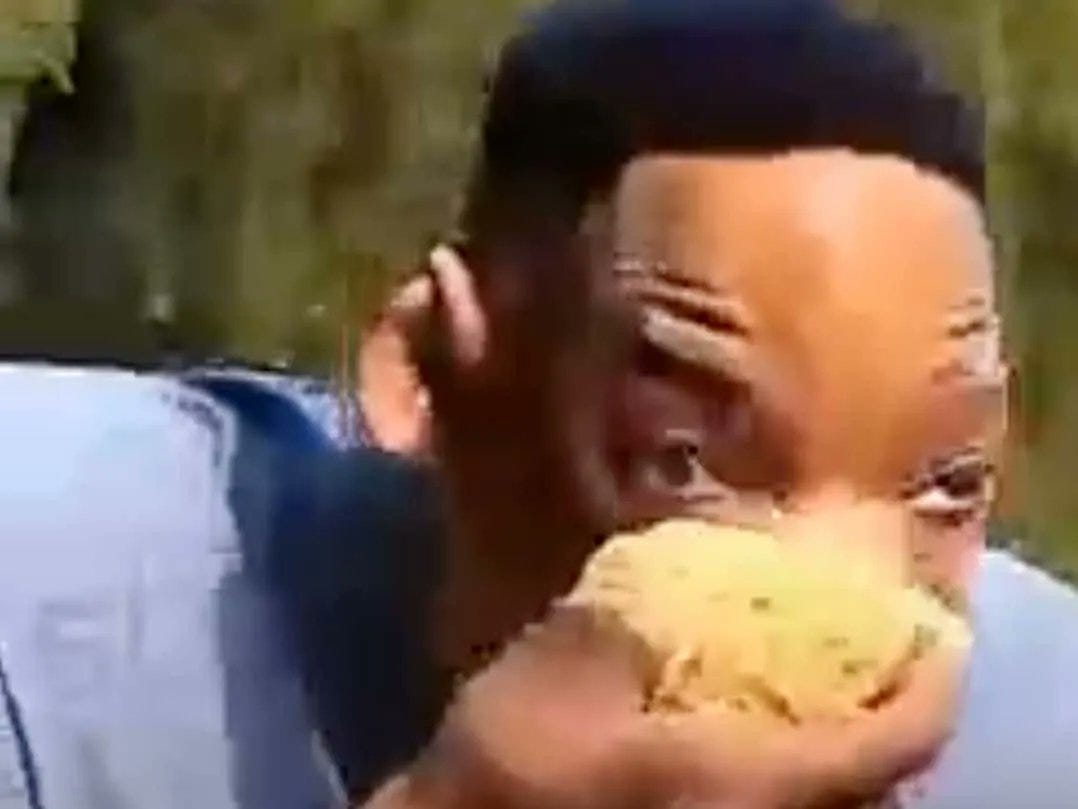
Gone are those days. Yet in the comments and quote tweets, this is what I see:
These suckers still think “typing words into ai to generate is them “making” anything
Looks like shit genuinely give up on your dreams
Acceptable! I don’t like the expression at 0:23 tho, it needs to be pushed more. Could you redo that expression?
What, you can’t?
Oh
And one of my personal favorites:
AI has evolved to perfectly imitate dubbed low-budget European animated films that get a 1 week theatrical run before getting dumped to Netflix
That’s a cheap dunk, and an accurate one, but… you get how that’s actually really impressive, right? You get how that’s very scary for artists, right? You get that the soulless Super Mario Bros. slop-quel made almost a billion at the box office, right?
Fellow artists: Pandora’s box has been opened. There really is no going back. I think non-tech people have been pattern-matching AI to the now-dead fads of yesteryear, like crypto, NFTs, and the Metaverse (long live Horizon Worlds), but even if you think certain people in the AI world are just trying to drum up hype, it’s undeniable at this point that AI has and will continue to have a profound impact on our society. You don’t have to like it, and indeed I personally find the gradual proliferation of low-effort, sloppy AI art both on- and offline to be very off-putting. But it’s happening, we can’t stop it, and at this point I’m sure I’ve seen plenty of AI images and videos that I haven’t been able to clock — and I’m probably in, like, the 90% percentile of being to identify these things!
I don’t know what the future of the art industry is gonna look like. I really hope we don’t end up in a world where AI-generated vertical videos are the de-facto default form of entertainment (although arguably they basically already are…). I really hope that there will always be a place for the human artistic vision, that artists will continue to get to make the art they want to make and that mediums like drawing and animation don’t go the way of (in the words of the great Timothée Chalamet) opera and ballet—that is, niche elite-coded forms of art, indefinitely confined to a corner of obscurity in the wider world of culture, relics of a bygone era. But if we want to avoid that, the first step is to acknowledge that we are indeed on that path, and that mockery and ridicule is no longer sufficient.
They’re on Substack, too, under the username (prepare yourself): 𒐪𒐪𒐪𒐪𒐪𒐪𒐪𒐪𒐪𒐪𒐪𒐪𒐪𒐪𒐪𒐪𒐪𒐪𒐪𒐪𒐪𒐪𒐪𒐪𒐪𒐪𒐪𒐪𒐪𒐪
The question of whether “AI art” is “Art” is not a question of verisimilitude. It is a question of expression - something that AI inherently lacks.
Art has meaning because someone made it. It is a form of self-expression. I can look at a photograph and admire the colors and composition. These qualities can evoke a powerful aesthetic response with no further context. But a photo of a sunset is not Art because it is beautiful. It is Art because SOMEONE took the picture, or penned the script, or performed the song. They did so for a reason, however mundane, even if only to convey a fleeting thought or lived moment of experience.
The hands are a red herring. AI art fails to be Art because it is not human-made. It is simulacra. OpenAI can trot out a shinier version of the Will Smith AI Spaghetti Video every year, and every year it will be no more Art than the first variation. There is no magical boundary line between Art and non-Art that is drawn* by “how good it looks.” This is the same line of thinking that leads your most snarky relative to point at a Jackson Pollock painting and say, “Yeah, right. My KID could draw that!” (To be clear, a child’s kindergarten turkey drawing is still Art, and often very powerful and meaningful Art.)
—
When presented with this Water Lilies post, my reaction is not to consider the symmetry; the brushstrokes; the palette. I simply don’t care about any of that. If SCHL0M’s Water Lilies was generated by Claude, then I have no motivation to engage with the work as Art. The pixels are empty.
Except, apparently, SCHL0M’s Claude’s Water Lilies was not made by Claude. It was painted by Monet. So it is Art. This does not make me a fool**; it makes SCHL0M someone who does numbers on Twitter. Yes, nothing material about the work has changed, but it makes all the difference.
—
I have certainly met people who believe that AI will fail for the specific reason that “it will never be as good as humans.” But in the grand scheme of things, this is a straw-man that exists in the replies of a Blue Checkmark engagement bait post. And why was that post made?
https://x.com/SHL0MS/status/2054835013758091577
(A post deserving of mockery and ridicule)
There is a dangerous rhetoric about the legitimacy of AI art. The constant online framing of AI as a disruptor to the artistic establishment has the result of blurring the lines between Art and Content. My worry is that this piece contributes to this rhetoric. Yes, AI art is not Art. But let’s be clear - AI art is not a substitute for Art, either. Its proliferation cheapens creative work, and trains the reader to be complacent with aesthetic over substance.
If, in 50 years, culture values human artistic vision, it will not be because we correctly observe AI passing the benchmark tests of technical excellence. It will be because we encourage people to value expression, connection, and self-reflection.
—
*Pun not intended.
**Maybe it does make me someone who is gullible or lacking in art history knowledge!
UnEdit #11349
When the spoon boy in Matrix says "there is no spoon", low-level telling Neo that everyone are inside a simulation and suspension of belief is required to affect changes, he is really (message from directors) saying that any system is UPHELD by belief - that the borders of the system really are where everyone say they are, and disbelief/apocryph views only MOVE borders, change the size of the playing field. Eg. that opposition to systems mostly only ease your own moral suffering.
Intents and realities of physical art and digital art differ in much the same way a live theatre performance differs from a filmed performance; uncomparable as mediums, different "systems". Thus they are only to be viewed as comparative in the sense that they have been "created" - given frameworks.
As such one medium is done upon transference of ownership (purchase of physical painting, fx, remove from studio/gallery, hang on own wall, artist cannot change), while the other is continually "open" as work, until a hash-code is done of the work and kept apart from the work, to prevent alterations of the work. Different eras, maybe, but the first functions on the terms of the physical human individual, the other on society upholding the electrical power needed to confirm artistic intent. One ground in individual senses and body, the other in communal ability/"body".
--
Being a professional artist in the sense you describe may not be the best artist:
Lots and lots of artistically inclined and experienced people "turn" their art towards what can sell right now - to pay their bills. This without directly claiming/capitalising upon personal mastery of colour, texture, positioning of elements, but maybe on ability to depict present day topics, make to size or pantone colour scheme, make a customer happy etc. Is this selling out? Then most "professional" artists in your sense of the word are sell-outs. And with this position established, "non-professional" artists, so called "amateurs" (meaning "doing it for love") have no way of selling out..." and can thus do all the experimentation that real artists do...
= Money is not a result of art. Money is a result of selling. The artist, the dealer, the personal meeting. But art is not what is being purchased. What is sold is faked or real conviction, and what is bought is trust and experience and willingness to grow. Be it in understanding or money; the elements can be in balance or not. ART factors only as a frame. What you belive and trust and invest is the object of sale.
Take the prompt result of your illustration "AI, make me a 5 fingered human hand composed of fingers, mix the styles, colours, highlights and definition of Botticelli, Modigliani and Arcimboldo into a late modernist centre composition on black background" and you would get close to that. What are you then buying, apart from the knowledge that the art prompter probably didn't succeed with the first prompt? You are buying your own reactions to the piece. Your own learning. You then blow it up to 3 by 3 meters and what you may marvel in at breaktfast is that process - the cost to make it physical, the reactions of people seeing it for the first time - and over time this becomes part of your memory of this work. You see YOUR OWN EFFORT and the wow-effect of strangers following that. You could also buy a 3 x 3 meter video screen with the work perpetually displayed, and effect and memory would be the same: You see you. When you buy a real painting, possibly a limited print, you are directly corresponding with the artist, and you see the life in strokes. It mimics your own life. The digital artifact has no such traces - be it prompted or digitally drawn - and as such is only a matter of style and competence. Of aestetics.
The Danish philosopher Søren Kirkegaard said something in the vein of "most people are like children, occupied with aestetics, how idealized/stylised things are. Ethics come next, the actual importance of depicted content, and lastly the spiritual content telling viewers and creators of their place in the universe. The meaning of being. The gratefulness with being. The importance of recognising "the system we are in". Viewed as a learning process with constant new do-overs it is not an endgame - a result, where you win, when you recognise that you are smaller than a sun - but a dynamic system hinging on both recognition and loss and acquisition of recognition." That is the human artist with their physical interaction with a physical medium, where the opposition of the material plus the opposition of the "medium of flesh" are directly connected. Whereas digital creation has no weight. No body. No mass. And can therefore never ascend to Kirkegaard's spiritual regard of an actual universe on level with the body. And can therefore never be part of change except on a metaphysical level - as an illustration of thought. The heart does not come into play.
Working with LLM is that. Illustration of thought. It is what most people believe they ask for, when they think "art". Something their brain will approve of, "recognise" as essence, and therefore "more true" than less recognisable creations. If you are worried that your non-professional art will lose out to AI-creations, you and every other artistically inclined person can counter that by stop doing digital art and blow your own minds with physical creations. Detail stuff, opiniate, experiment with media, placement, intent, seek out new essence, strive for collectivity, for ethics and humility and tenderness and empathy, or coldness and dominion and cruelty and cessation, but be honest. And forget about cost and price. They are part of a optionable later stage of creation.
Honesty, KNOWING THAT YOU ARE HONEST is what makes you an artist. Intent. Whether you work with oils or with pixels. The only difference being that your digital creations can never be touched and therefore never compare to your life. Only to your thinking about it.